Cambodia SIM Card & eSIM for Expats 2026: Smart, Cellcard, Metfone

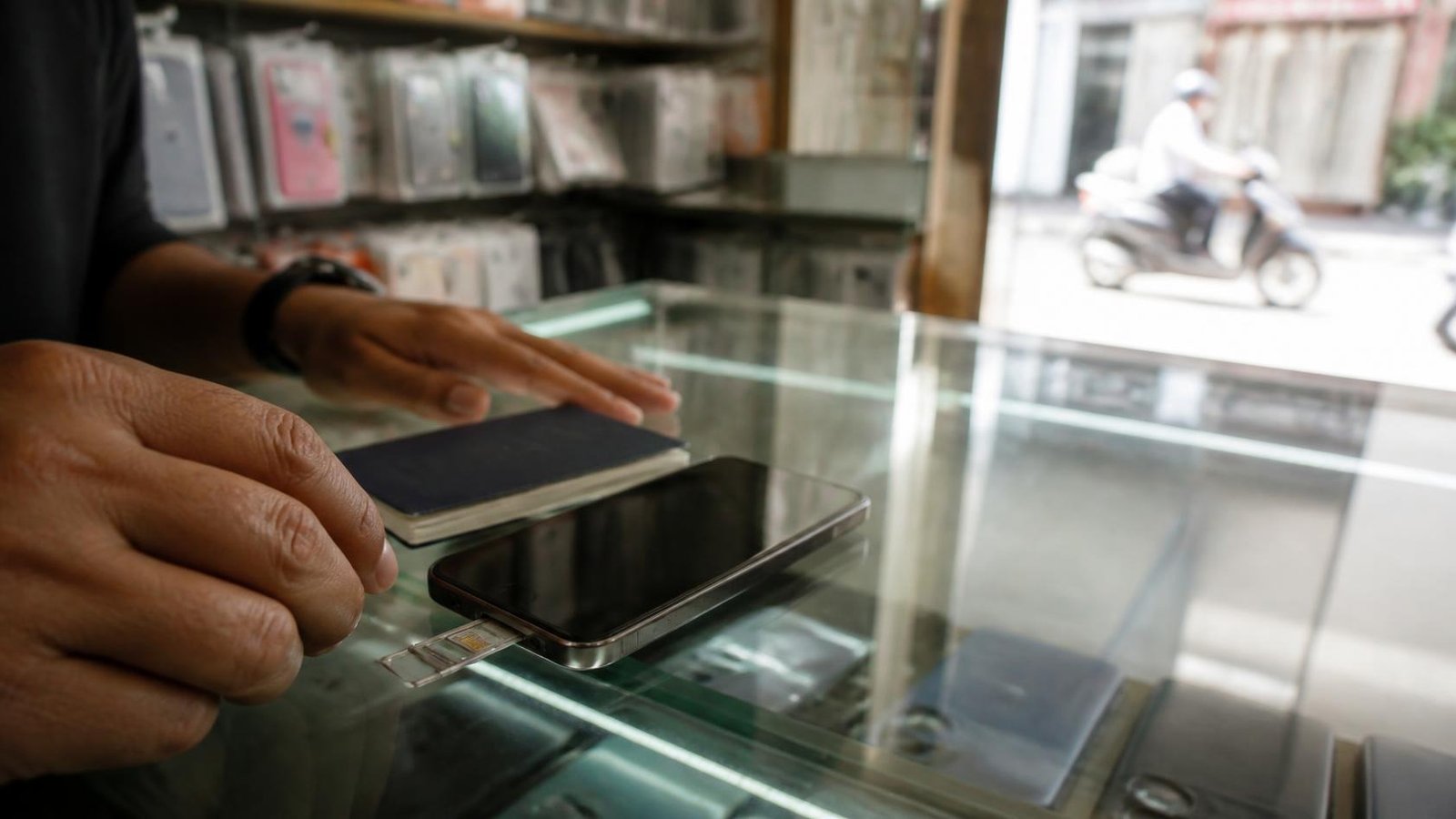
Yes — Get a Local SIM (or Bridge with eSIM) in 2026
Café Wi-Fi is fine for browsing. It is a weak plan for Grab/PassApp, landlord calls, and bank OTPs. Bridge landing day with a travel eSIM if your phone supports it, then buy a passport-registered Smart, Cellcard, or Metfone SIM at an official airport or town counter. Smart’s official Traveller SIM is $5 for 30 GB/15 days; Metfone and Cellcard tourist packs vary. Banking OTPs live in our ABA/Bakong guide; remote-work visa path in the digital nomad guide.
Do You Need a Cambodian SIM in 2026 (or Is eSIM Enough)?
Short answer: depends on trip length and whether you need a local number.
A travel eSIM can cover a short scout — maps, messaging, ride apps on arrival. Once you stay longer, a local Smart, Cellcard, or Metfone line usually wins on cost per GB and gives you a Cambodian number for drivers, landlords, delivery, and bank OTPs.
| Situation | What usually works | Why |
|---|---|---|
| 3–7 day scout, eSIM phone | Travel eSIM alone | Arrival data; often no local number |
| 1–2+ weeks, heavy data | Local physical SIM | Cheaper GB + KH number |
| Multi-month expat / remote work | Local SIM (+ eSIM bridge) | OTP, landlords, dual-SIM with home line |
| Rural / islands / highways | Metfone (or dual-SIM) | Bars when city carriers thin out |
Local-friend take: The 2026 pattern that keeps working is eSIM for the landing, local SIM for the stay. Do not land connectionless at PNH — or before the long drive in from Siem Reap–Angkor.
Smart vs Cellcard vs Metfone — Which Network for Expats?
All three cover the main expat circuit on 4G. Differences show up in consistency, rural reach, and tourist-pack value. 5G is rolling wider into 2026 but still concentrates in the capital and larger towns — treat it as a bonus, not your selection criterion.
| Network | Coverage | Tourist-friendly | eSIM / notes |
|---|---|---|---|
| Smart Axiata | Strong city consistency; solid tourist corridors | Yes | Common travel-eSIM host. Local eSIM in the SmartNas app, on the website or at a Smart Shop with a valid passport. Best default for PP / SR remote work. |
| Cellcard | Fast urban peaks; thins faster outside cities | Yes | Carrier eSIM via the cellcard app or official stores. Good stay-put capital pick. |
| Metfone | Widest rural / highway / many island routes | Yes | Many travel eSIMs ride Metfone. Dual-SIM insurance for Koh Rong, Mondulkiri, Cardamoms. |
2026 carrier plan prices (checked October 2026)
Prices below come from each carrier’s official rate card, checked on 12 October 2026. Promos change often, so confirm GB and validity at the counter or in the app before you pay. For how mobile sits inside a full monthly budget, see our cost of living 2026 guide.
| Profile | Band (USD) | Data / validity colour |
|---|---|---|
| Smart Traveller SIM | $5 | 30 GB / 15 days + 300 on-net minutes (airport Smart booths) |
| Metfone Tourist SIM | ~$3–9 | Metfone sells tourist SIMs at airport and town counters, with 25–40 GB packs around $3–9 in 2026 listings. Confirm GB and days at the counter. |
| Cellcard Traveller SIM | $5–20 | 3 GB / 3 days ($5) up to 30 GB / 30 days ($20) |
| Travel eSIM (e.g. Airalo) | From ~$4 | Airalo’s Cambodia eSIMs (on Smart’s network) range from regional data packs from about $4 to unlimited local plans from $12.50 (3 days) to $72.50 (30 days). Check the app for current fixed-GB packs. Data-only, no local number. |
| Settled monthly top-ups | $4–15 | Monthly data plans run roughly $4–15 for 25–250 GB/30 days. For example, Smart’s official 30-day plans are 90 GB for $6, 150 GB for $10 and 250 GB for $15. |
How Do You Buy a SIM at the Airport or in Town?
Airport (PNH / Siem Reap–Angkor): Official Smart / Cellcard / Metfone kiosks usually sit in arrivals. Pros — instant number, registration done for you. Cons — late booths can wind down; jet-lagged price comparison is weak; skip random hallway sellers.
Town / mall shops: Aeon, Lucky, Chip Mong corridors, and flagship stores are the calm path — clearer menus, easier returns.
Street shops: Fine for top-up vouchers. Risky for first activation (markup, recycled numbers, incomplete KYC).
What About eSIM — Which Apps Work and What Are the Catches?
Travel marketplaces (Airalo, Saily, Nomad, Holafly, and peers) install before you fly and activate on landing. Smart and Cellcard also sell their own eSIM through their apps and shops. Smart’s app flow takes a valid passport scan plus a face check, so a foreigner can set up a local line without a SIM tray. Physical local SIMs still win on cost for stays past a few days.
| Factor | Physical local SIM | Travel eSIM | Local carrier eSIM |
|---|---|---|---|
| Cost per GB | Usually best | Higher | Same as local prepaid plans |
| Local number | Yes | Usually no | Yes (when full line) |
| Arrival friction | Queue + passport | Pre-install at home | Store / app flow |
| Best use | Stay ≥1–2 weeks | Landing bridge / short scout | Tray-free local line |
Catches: locked phones reject Cambodian SIMs; dual-SIM keeps home banking 2FA alive; prepaid numbers can be recycled after a long spell without top-ups, so keep the line active if you leave the country; eSIM QR installs need stable Wi-Fi and one clean profile.
Passport, Registration, and Number Rules (Honesty)
Secondary and expat sources consistently state that the Telecommunication Regulator of Cambodia (TRC) requires nominative registration of SIMs against identity documents. Bring your original passport to an official counter. Staff scan or photograph it and activate — usually 5–15 minutes.
Grey-market “no passport” SIMs risk deactivation and recycled numbers. Carriers can limit how many SIMs one passport can register, so ask at the counter if you need more than one line. Postpaid products may ask for lease + longer visa; that is a different product from tourist prepaid.
This guide does not invent regulatory or visa fees. Work-shaped stays start with our digital nomad guide.
Local-friend take: Passport registration is boring bureaucracy, not a scam by itself. The scam risk is who sells you the SIM — stick to branded carrier counters.
How Much Data Do Remote Workers Actually Need?
Think in profiles, not marketing “unlimited.”
| Work style | Rough monthly mobile need | Stack tip |
|---|---|---|
| Light (Slack, email, maps) | ~10–20 GB | Café Wi-Fi + modest local plan |
| Medium (daily calls, some hotspot) | ~30–60 GB | Local pack + fiber when settled |
| Heavy (hotspot video most days) | ~80–100+ GB or fiber-first | Home fiber primary; SIM as failover |
City 4G is usually “good enough” for Zoom when coverage is clean. Rural and storm days are when Metfone dual-SIM and café failover matter. Connectivity only — immigration posture lives in the digital nomad guide. Monthly internet+mobile colour also sits in the cost of living breakdown.
How Do You Top Up (KHQR, Apps, Street Shops)?
Troubleshooting: No Signal, Failed eSIM, Lost Passport SIM
| Problem | Try this |
|---|---|
| No bars after insert | APN / mobile data on; airplane toggle; try another area; consider Metfone if rural |
| Data but no calls | Confirm voice on plan; travel eSIMs are often data-only |
| eSIM QR fails | Stable Wi-Fi; one clean profile; confirm unlock + eSIM support |
| Sudden “invalid SIM” | Likely KYC / grey SIM — return to official shop with passport |
| Lost phone / SIM | Official shop + passport; expect a new number more often than recovery |
| OTP never arrives | Confirm bank has your KH number; set KH line as default SMS on dual-SIM |
| Airport booth closed | Use pre-installed travel eSIM; buy local SIM in town next morning |
Frequently asked questions
5 answers · tap to expand01 Do I need a Cambodian SIM if I already have an eSIM?
For a short visit, a travel eSIM can cover maps and messaging. For longer stays, a local Smart, Cellcard, or Metfone SIM usually wins on cost per GB and gives you a Cambodian number for Grab/PassApp, landlords, and bank OTPs. Many people bridge landing day with a travel eSIM, then buy a local SIM in town.
02 Which network is best — Smart, Cellcard, or Metfone?
Smart is the usual city default for consistency. Cellcard often posts strong urban speeds. Metfone wins rural, highway, and many island routes. Heavy movers sometimes carry Smart + Metfone in dual-SIM. Treat speed claims as directional and test on your own routes.
03 Is passport registration required for a Cambodia SIM?
Yes. Secondary guides consistently state that the TRC requires nominative registration with a passport at purchase. Buy at official carrier counters so registration is done properly. Unregistered or grey-market SIMs can be deactivated. Ask at the counter if you need more than one line on the same passport.
04 How do I top up a Cambodia SIM?
Carrier apps (SmartNas, My Metfone, Cellcard), ABA or other bank Mobile Top-Up, KHQR/Wing-style transfers where supported, and cash vouchers at grocery shops. Once you have a local bank account, app top-up is usually easiest — see MoveKH’s ABA/Bakong banking guide.
05 Will a Cambodia SIM work for remote work and hotspotting?
Yes for many remote roles if you treat mobile as backup or café/fiber complement. Tethering is commonly available on the big three (check your plan’s terms). Budget data to your call load; settle onto fiber when you can. Visa path: digital nomad guide.
Next steps
Related guides
 Getting aroundGetting around Phnom PenhWhen to use PassApp, Grab or a tuk-tuk.
 ArrivalCambodia e-Arrival cardThe free official arrival form and how to fill it in.
 VisasDigital nomad visa: what works insteadThe visa routes remote workers actually use.
MoveKH guide for Clear Brand Studio / MoveKH.com. Not legal or telecom-regulatory advice. Plan prices and registration practice can change — confirm at carrier counters, apps, and TRC-facing guidance before you act. Research pass: 28 September 2026 (Asia/Phnom_Penh).
Was this guide helpful?
Your vote helps our editorial desk prioritize updates.