Cambodia Visa Requirements 2026: Tourist vs E-Class, e-Visa vs On Arrival

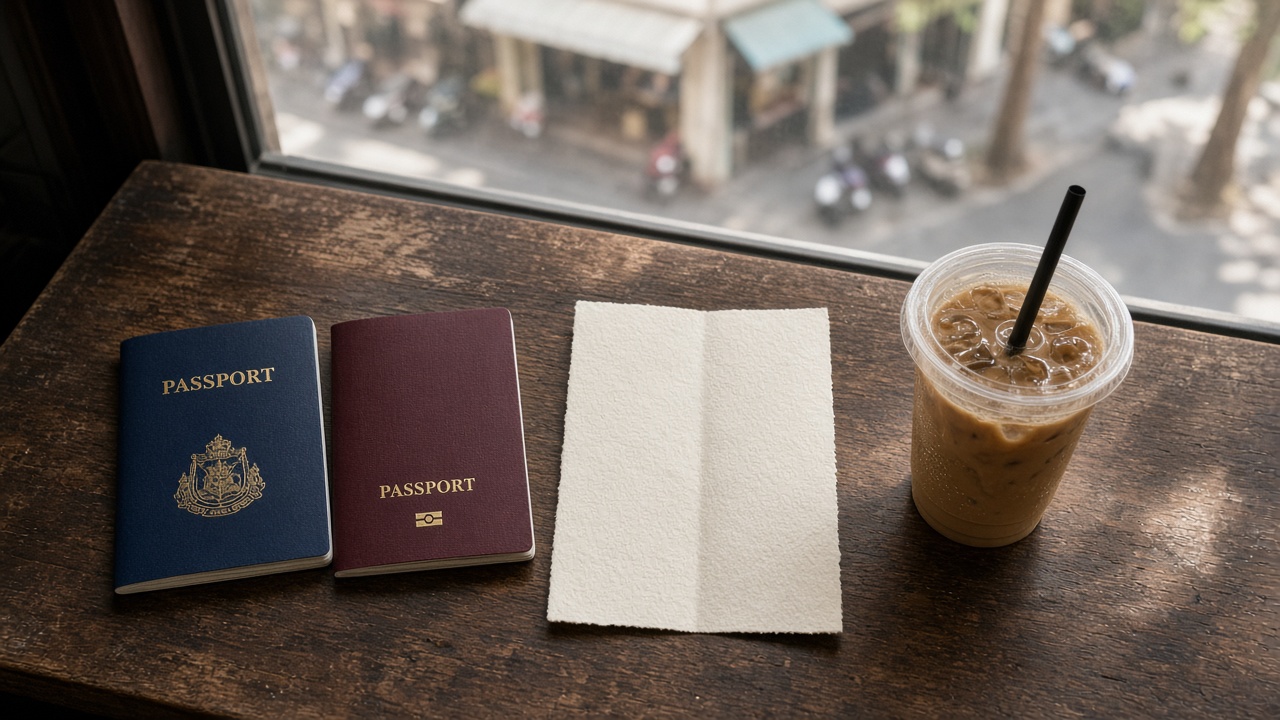
Cambodia is one of the easier countries in Asia to get into. But one small choice, T or E, decides how long you can stay later.
This page helps you pick the right visa, apply on the real government site, and skip the copycat sites that charge you extra. It takes about five minutes to read.
- Most visitors need a visa: pick Tourist (T) for a holiday, or Ordinary (E) if you might stay, work or retire here.
- Apply on the official evisa.gov.kh (USD 30 for T, USD 35 for E, about 3 business days) or get a visa on arrival.
- Then fill in the free e-Arrival card within 7 days before you land.
- Land borders with Thailand are closed right now, so fly in or cross from Vietnam or Laos.
- Use only .gov.kh sites. The real ones are evisa.gov.kh and arrival.gov.kh.
Moving here, not just visiting? Our free Moving to Cambodia Checklist walks you through every step after the visa.
Which Cambodia visa do you need?
Most people use one of two visas. They cost almost the same and both give you 1 month. The difference shows up when you want to stay longer.
| Tourist (T) | Ordinary / Business (E) | |
|---|---|---|
| Best for | Holidays and short trips | Work, business, retirement, study, or “I might stay” |
| e-Visa fee | USD 30 | USD 35 |
| Stay per entry | 1 month | 1 month |
| Use it within | 3 months of issue | 3 months of issue |
| Can you extend? | Once | Yes, with several long-stay options |
| Path to a long stay | No. You leave when it runs out | Yes, through E-class extensions |
| Can you work? | No | Only with a work permit as well |
e-Visa fees and terms from evisa.gov.kh, checked 22 October 2026.
Local tip
If there is even a small chance you will stay longer than a holiday, take the E visa. On the e-Visa site it costs only USD 5 more, and it keeps your long-stay options open. Our E-Class visa guide explains every extension type.
What do you need to enter Cambodia?
Here is the checklist that official sources agree on. Tick it off a week before you fly.
- Passport: valid for at least 6 months from the day you arrive, with no damage or missing pages.
- One blank page for your entry stamp.
- A visa (e-Visa or visa on arrival), unless your passport is visa-exempt.
- A photo: a digital photo (JPEG or PNG) for the e-Visa, or a printed one for visa on arrival.
- Clean US dollars if you plan to get a visa on arrival. Ripped, torn or stained notes are generally not accepted in Cambodia.
- Your flight and hotel booking. Cambodian embassies list these as supporting documents for a tourist visa, so keep them on your phone.
- The e-Arrival card: free, and every traveller should submit it within 7 days before arrival, even with a visa. See our e-Arrival card guide.
- Yellow fever certificate, only if you are coming from a country with a yellow fever risk.
e-Visa vs visa on arrival: which is better?
Both get you the same 1-month stamp. The real difference is where you can use them.
| e-Visa | Visa on arrival | |
|---|---|---|
| Where to get it | evisa.gov.kh or the official e-Visa app | Immigration counter when you land |
| When | Before you travel. About 3 business days | On arrival |
| Fee | USD 30 (T) or USD 35 (E), paid by card | Paid in US dollars. Check the current fee on official sites before you go |
| Accepted at | Techo (Phnom Penh), Siem Reap Angkor and Sihanoukville airports, plus Bavet (Vietnam border) and Tropaeng Kreal (Laos border) | International airports and open land border checkpoints |
| Best for | Flying into one of the three airports and skipping the queue | Last-minute trips, or crossings that do not take the e-Visa |
Fees and e-Visa ports from evisa.gov.kh and the Royal Embassy of Cambodia, checked 22 October 2026.
Our take: if you fly in, get the e-Visa. You land with the paperwork done. If you cross from Vietnam at a checkpoint other than Bavet, the e-Visa is not accepted for entry there, so plan on a visa on arrival.
Heads-up, October 2026
All land border crossings between Cambodia and Thailand are closed until further notice. That includes Poipet and Cham Yeam. Coming from Bangkok? Fly, or come in through Laos or Vietnam. The UK and US governments also advise against travel near the Thai border. Check the UK travel advice before you go.
One more 2026 change: since 3 October 2026, Cambodia no longer puts visa stickers in passports. Visas from Cambodian embassies now arrive by email too.
Is your crossing not on the e-Visa list? The Cambodian embassy in Berlin says visas you apply for through an embassy are accepted at all open entry points, unlike the e-Visa. Check with the embassy you apply through, which may add a small service fee.
How do you apply for the official Cambodia e-Visa?
It only takes a few minutes. Have your passport, a digital photo and a bank card ready.
Timing tip
The 3 business days is an estimate, and public holidays can slow it down. Apply at least a week before your flight.
Get the free Moving to Cambodia Checklist 2026
Every step, from choosing a visa to FPCS, banking and healthcare, in one short list.
How do you spot a fake Cambodia e-Visa website?
Search “Cambodia e-visa” and the top results are often not the government. Lookalike sites often look official, then add their own “service fee” on top of the same form.
Travellers on Reddit have posted about paying lookalike sites far more than the official price. Cambodia’s immigration department has also publicly warned about fake e-Arrival sites.
Red flags: close the tab if you see any of these
- The web address does not end in .gov.kh. The real ones are evisa.gov.kh and arrival.gov.kh.
- The price is above USD 30 (T) or USD 35 (E), or there are extra “processing”, “express” or “service” fees.
- It charges you for the e-Arrival card. The official one is free.
- It promises “guaranteed” or “1-hour” approval.
- It shows up with a “Sponsored” label at the top of search results.
- Your e-Visa has no QR code you can scan and check.
Already paid a lookalike site? Look up your application on the official “Check & Change” page. If it is not there, apply again on evisa.gov.kh and ask your bank about the charge.
Can you extend a tourist visa or switch to E-Class?
Tourist (T): you can extend it once, inside Cambodia. After that, you need to leave.
Ordinary (E): this is the visa that grows with you. You can extend it as a business, retirement, job-search or student stay. Our E-Class guide covers each type, and the visa and immigration hub covers costs and where to apply.
Switching from T to E? In general you cannot turn a tourist visa into an E-class stay inside Cambodia. Plan to leave and come back on an E visa. If you are not sure, ask immigration or a licensed agent before your stamp runs out.
- Your passport needs at least 6 months of validity from the start date of the extension.
- Make sure your address is registered in FPCS. If it is not, you may not be able to extend. Here is our FPCS guide.
- Planning to work? An extension lets you stay, not work. You also need a work permit. See our work permit guide.
Which nationalities don’t need a visa?
Citizens of the other nine ASEAN countries can visit Cambodia visa-free on an ordinary passport. The length of stay is not the same for everyone.
| Visa-free stay | Ordinary passports from |
|---|---|
| 30 days | Indonesia, Laos, Malaysia, Philippines, Singapore, Vietnam |
| 14 days | Brunei, Myanmar, Thailand |
Outside ASEAN, the embassy list also shows visa-free entry for ordinary passports from the Maldives (30 days) and Seychelles (15 days). Most other travellers, including US, UK, Australian and EU passport holders, need a visa.
Visa-free or not, everyone should still fill in the free e-Arrival card. Exemption lists change, so check the Cambodian embassy for your country before you book.
Cambodia visa FAQ
5 answers · tap to expand
01Do US citizens need a visa for Cambodia?
Yes. US citizens need a visa. You can get an e-Visa on evisa.gov.kh before you fly, or a visa on arrival. Your passport must be valid for 6 months beyond your arrival date, with one blank page for the stamp.
02How long does the Cambodia e-Visa take?
The official site says about 3 business days. That is an estimate, and holidays can slow it down, so apply at least a week before you travel.
03Can I get a visa on arrival at Cambodia’s land borders?
Yes, at open land border checkpoints, for example the crossings with Vietnam and Laos. All land crossings with Thailand are closed until further notice. If you have an e-Visa, the only land borders that accept it right now are Bavet and Tropaeng Kreal.
04What is the overstay fine in Cambodia?
The US State Department says the fine is USD 10 per day, paid in cash. If you overstay more than 30 days, you also need an exit visa (USD 30) from the Visa Office in Phnom Penh, which takes 2 to 3 working days. Overstaying can also lead to detention or deportation, so extend in time.
05Can I switch from a tourist visa to a business visa?
Not inside Cambodia, as a rule. A tourist visa can be extended once, then you need to leave. If you want to stay long term, enter on an Ordinary (E) visa. Our E-Class guide shows the options.
Keep reading
Related guides
-
Fill in your free e-Arrival cardDo it within 7 days before you land, on the official site only.
-
Ordinary (E-Class) visa: every extension explainedBusiness, retirement, job-search and student stays.
-
Visa and immigration hub: extensions, work permits, FPCSCosts, where to apply and what to bring.
-
FPCS address registrationWithout it, your extension can stall.
-
Work permit and labour cardYour visa lets you stay. This lets you work.
MoveKH guide. Not legal or immigration advice. Visa rules, fees and open borders can change without notice, so check the official e-Visa site, your Cambodian embassy or the General Department of Immigration before you travel. Sources: evisa.gov.kh, Royal Embassy of Cambodia (Berlin, Geneva), GOV.UK and the US State Department. Last reviewed: 22 October 2026.
Was this guide helpful?
Your vote helps our editorial desk prioritize updates.